Rêve : On me demande de traduire un texte, je refuse, on insiste de plus en plus, je refuse d’autant plus fermement que cela implique l’utilisation obligatoire d’un “moteur de traduction”, sans jamais que cela soit dit explicitement.
Au réveil, deux choses : la première concernant le moment où j’ai rompu ma collaboration à un journal, devant l’insistance du rédacteur-en-chef que j’accélère la livraison de mes articles en utilisant un “moteur de recherche” qui se chargerait de “lire” et “résumer” les articles préparatoires que je lisais moi-même. Tant qu’à y être, autant demander au “moteur” d’écrire l’article lui-même. Ciao, Berthe, et vaya con dios.
Mais aussi ; le souvenir de ce qui avait précédé ma “fugue” à la bibliothèque lorsque j’avais 14 ans. C’est que, dans le cours de grec classique, nous avions lu des extraits d’Antigone sur lequel j’avais rédigé un devoir que je trouvais “trop bien” pour la religieuse qui assurait ce cours. Alors, j’étais partie à la bibliothèque, en apprendre plus long sur la tragédie grecque. Et oui, devant parents et détective venu faire la leçon à la fugueuse, j’avais répété que mon devoir était “trop bien” pour la maîtresse, soulevant la réaction, déjà connue de l’école au sujet du “péché de Lucifer”, l’orgueil qui serait ma perte assurée. Va pour la perte, m’étais-je dit; je ne pensais pas si bien dire.
Mais aussi les deux moments qui scellèrent mon amour pour le prince Mychkine dans L’Idiot de Dostoëvski, au même âge (donc, dans je ne saurais dire quelle traduction): celui où devant la générale et ses trois filles, il raconte comment à Bâle, un soir, le cri d’un âne l’a tiré de son hébétude et, un peu plus loin, à la croisée des chemins, alors que Gania vient à nouveau de le traiter d’idiot, il propose calmement qu’il vaudrait sans doute mieux que leurs chemins se séparent. Mon héros.
*
Donc, hier, je suis allée à cet atelier qu’on m’avait proposé, afin de ne pas décevoir la personne qui me l’avait offert en pensant me faire plaisir. L’atelier était sous le thème de la liberté. Les dix personnes y participant (neuf femmes, un homme) écrivirent deux textes, le premier, après le choix d’une image représentant un enfant, le second en version écriture automatique au son d’une musique choisie par l’animatrice. Dans le premier texte, je m’adressais à un souvenir de mon petit frère, alors âgé de trois ans et moi de neuf, assis sur le sol près du chalet à manger du riz et moi, lui racontant une histoire que j’inventais au fur et à mesure au sujet d’une Chine dont je ne connaissais rien.
Après lecture, l’animatrice de me demander : “Et ça représente la liberté, pour toi ?” Oh que oui, ai-je répondu, un moment où je pouvais dire ce que je voulais, comme je l’entendais, sans que personne ne me juge, me corrige, me critique. “Ah bon, si tu le dis,” dit-elle.
Ensuite, je suis rentrée à la maison, j’ai dormi presque tout l’après-midi, puis j’ai traduit un texte que j’ai publié sur la page facebook “Maria Damcheva”, texte qu’on lira ou pas, je m’en fous, je n’ai rien à voir avec ce que d’autres décident de lire. (Il s’agit des opinions de l’avocat américain George Conway, anciennement membre du parti Republican, hautement critique de Trump alors même que son épouse était la porte-parole de ce dernier. Divorcé depuis, et dorénavant candidat du parti Democrat pour les élections de mi-mandat aux Etats-Unis.)
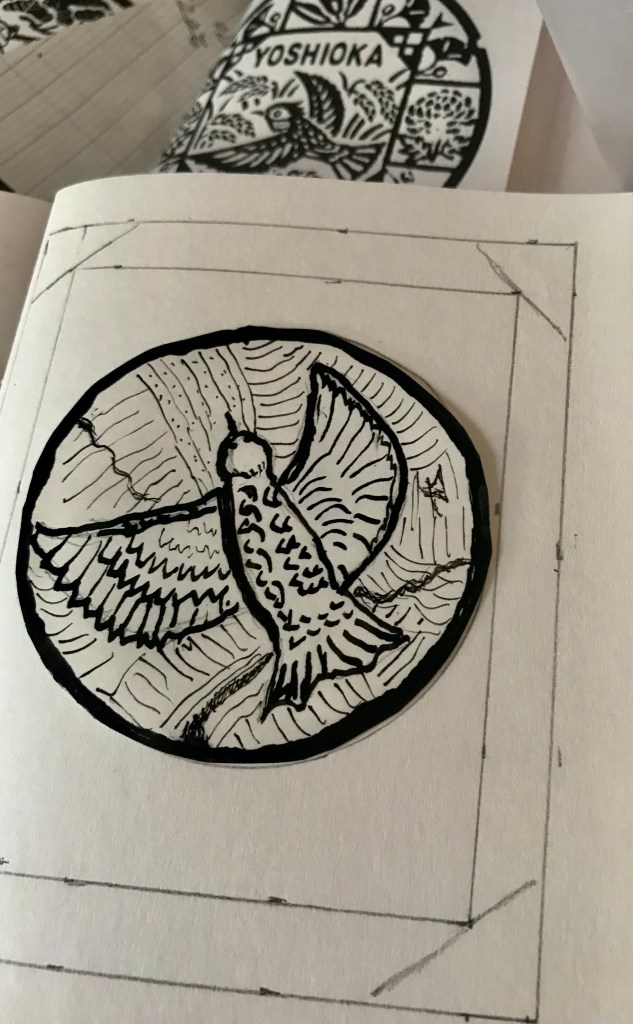
Le deuxième texte en atelier ? En roue libre, ” la nuit flottante comme un nuage, l’esprit planant sur les eaux, premier merle né de la nuit, personne pour lui demander d’où il venait, il planait, le ciel se déroulant sous lui, ciel nouveau-né, lui aussi…” et ainsi de suite. Sur une musique qui ne me plaisait pas du tout.
*
“L’orgueil sera votre perte, mademoiselle.” Je ris. Et bien, soit. Moi, je trouve qu’il m’a plutôt bien servi.
*
Dream : I am asked to translate a text, I refuse, the insistance grows, I refuse that much more firmly that it involves the mandatory use of a “translation system”, without this being said explicitly.
Two things upon waking: the first about the moment when I broke off my collaboration to a journal, facing the editor-in-chief’s insistence that I speed up the delivery of my articles by using a “research motor” that would handle the “reading” and the “summarizing” of articles I read myself to prepare my own. While we were at it, might as well ask the “motor” to write the article itself. Ciao Bertha and vaya con dios.
But also: the memory of what came prior to my “playing hooky” at the library when I was 14 years old. What had happened was that, during the class in classical Greek, we had read excerpts from Antigone on which I had written a homework I found “too good” for the nun giving the course. So, I had headed to the library to learn more about Greek tragedy. And yes, in front of parents and the detective who showed up to teach me a lesson, I repeated that my homework had been “too good” for the teacher, earning me the already well-known reaction, the same as in school, concerning “Lucifer’s sin”, pride which would prove to be my guaranteed downfall. Fine by me, had I thought to myself, not realizing how true that would be.
But also, the two moments that sealed my love for Prince Myshkin in Dostoyevsky’s The Idiot at the same age (so who knows in which translation): the moment when, in front of the general’s wife and her three daughters, he related how in Basel, one night, the cry of a donkey pulled him out of his stupor and a bit further, at the crossroad when Gania has just called him an idiot again, he calmly suggests it might be best if they both went their separate ways. My hero.
*
So yesterday, I went to the workshop I had been offered, I went so as not to disappoint the person who had offered it to me, thinking to please me. The workshop was under the theme of freedom. The ten participants (nine women, one man) wrote, then read, two texts, the first after choosing an image representing a child, the second in a version of automatic writing to the sound of music chosen by the group leader. In the first text, I addressed a memory of my young brother, then aged three and of myself, nine years old, sitting on the ground near the cottage, eating rice while I made up a tale as I went along, about a China I knew nothing about.
After I’d read it, the group leader asked me: “And this represents freedom for you?” Oh and how, I answered, a moment when I could say anything I wanted, as I saw fit, without anyone passing judgment, correcting me, criticizing. “Oh, if you say so,” she says.
After which I came home and slept almost all afternoon, then I translated a text I published on the “Maria Damcheva” facebook page, whether anyone reads it or not is not my problem, I have nothing to do with what others decide to read. (It’s about the opinions of the American lawyer George Conway, formerly a member of the Republican party, highly critical of Trump at the time when his own wife was the man’s spokesperson. Divorced since, and now a candidate for the Democrat party in the US mid-term elections.)
The second text ? Freewheeling, “the night floating like a cloud, the spirit hovering above the waters, first blackbird in the night, no one there to ask where he came from, he hovered, the sky unfolding under him, the sky, newborn also…” and so on. On a musical selection I didn’t like at all.
*
“Pride will be your downfall, mademoiselle.” I laugh. OK, so be it. Personally, I consider it has served me rather well.

