Le français a deux mots – au-revoir et adieu. Le premier supposant une possibilité de se revoir dans un avenir terrestre. Le second signifiant une séparation définitive, à moins de croire à des retrouvailles après la mort. L’anglais, un seul – goodbye qui peut signifier ” à plus tard” ou “à jamais”.
En vieilissant, les au-revoirs conservent leur petite lueur d’espoir mais revêtent un caractère de plus en plus définitif. C’est tout un apprentissage de vieillir. Je ne comprends pas qu’on traite cet âge avec autant de désinvolture alors que c’est un moment où la necessité de conclusions s’accumule avec les au-revoir aux amis, aux amours, aux rêves, aux projets qui ne se réaliseront jamais, alors que l’attachement à la vie ne faiblit qu’en cas de souffrance intolérable – et encore, ça n’est pas toujours le cas.
Pour moi, deux autres au-revoir se sont ajoutés à la liste hier. On a beau se dire que les amitiés véritables peuvent absorber les chocs de la séparation et de la distance, le contact en “présentiel” (selon l’horrible expression nouvelle) a quelque chose d’irremplaçable.
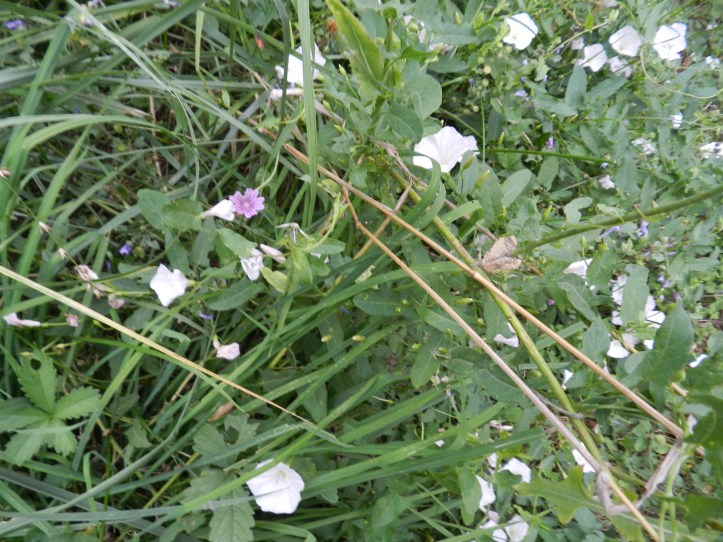
Alors, j’écoute et je chante avec Leonard Cohen, j’ouvre la porte arrière et je découvre qu’au petit matin, le liseron dégage un parfum délicat et suave, tout comme certaines réminiscences au sujet de personnes aimées, enracinées dans la mémoire malgré les distances, temporaires ou définitives.
Sentimentale? Oui. Ça m’arrive, à l’occasion. Ça fait partie des trucs occasionnellement utiles, rangés dans les poches extérieures du sac à dos.
*
Non, il ne s’agit pas d’un au-revoir à cette plate-forme. Je maintiendrai le blog aussi longtemps qu’il me semblera utile de le faire, qu’il soit lu ou non, apprécié ou non, bouteille à la mer reçue quelque part, ou non.
*
En re-lecture en ce moment: La Pénélopeiade de Margaret Atwood.
*
French has two words – au-revoir and adieu. The first implies a possibility of meeting again here on earth. The second signifying a final separation, unless you believe in meetings occurring again after death. In English, there is only one word – goodbye, which can mean “see you later” or “never more”.
When you age, goodbyes maintain their slight ray of hope but take on a more and more definitive form. Ageing is a whole apprenticeship. I don’t understand how we can treat it in such an off-handed way, when it is the time when necessary conclusions accumulate with goodbyes to friends, to loved ones, to dreams, to projects that will never be realized, while attachment to life does not weaken except in the face of unbearable suffering – and even then, this is not always the case.
For me, two more goodbyes were added to the list yesterday. You can always tell yourself that true friendships can absorb the shocks of separation and distance, contact in a “presential” way (as currently known in the horrible French expression) has something irreplaceable to it.
And so, I listen to and sing along with Leonard Cohen, open the back door and discover that, in the early morning, bindweed gives off a delicate and lovely scent, just like some of the finer recollections of loves ones, rooted in your memory despite distances – be they temporary or definitive.
Sentimental? Yes. Happens, sometimes. Part of the occasionally useful stuff, tucked into the side pockets in a backpack.
*
No, this is not a goodbye to this platform. I’ll maintain the blog for as long as it feels useful to me, whether others read it or not, like it or not, whether the bottle thrown in the sea reaches shore or not.
*
Re-reading at the moment: Margaret Atwood’s The Penelopiad*
*Margaret Atwood, The Penelopiad, Canongate Books, Edingurgh Scotland 2005
 iknowiknowiknowblog